

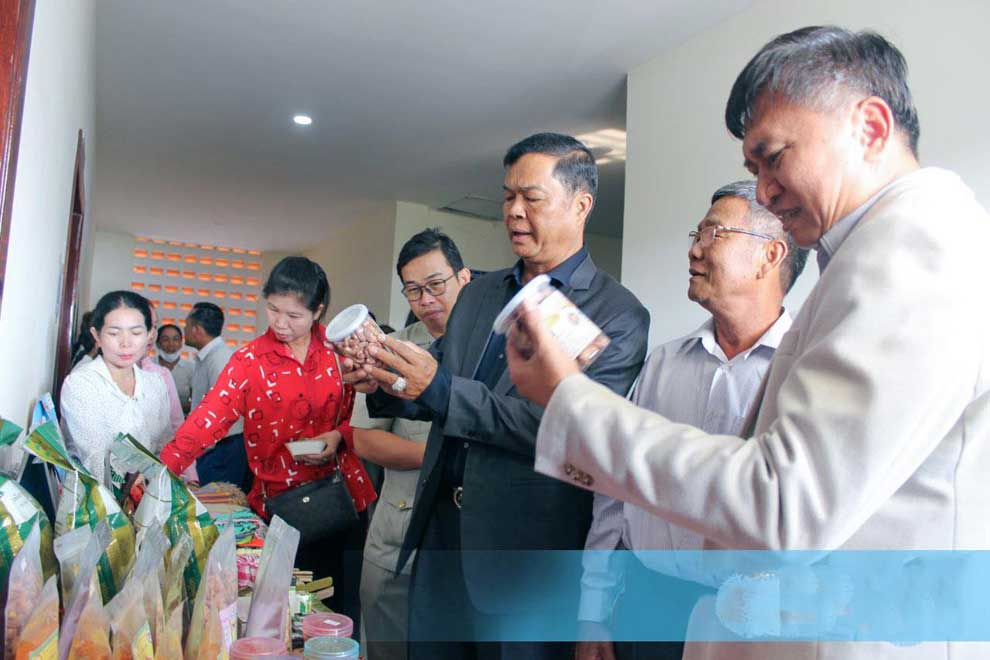
The Ministry of Commerce has been assisting artisans and traders who run businesses producing Cambodian goods in Kampong Cham province to enhance the quality, safety and aesthetics of their brands to meet both local and international export standards, its senior official said.
Kao Kosal, head of the General Department of Trade Promotion, made the statement during a workshop held in the province on March 15.
He emphasised that the forum and the ministry’s efforts are geared towards developing Cambodian products to compete with imported goods.
He said the initiative is expected to encourage the use of local products, increasing productivity, employment opportunities and income.
“Kampong Cham boasts numerous products like paddy rice, cassava, cashew nuts, rubber, pepper, corn, Keo Romiet mango and bananas. These have considerable potential in both domestic and foreign markets.
“The ministry is advocating for these goods to be processed hygienically and in line with standards, aiming to enhance the promotion of Cambodian products for local consumption and export,” he said.
Kosal noted that crafters and traders need to focus on several key areas, including developing Khmer products to meet current market demands, attractive and standard-compliant packaging, effective branding and strategies for distributing these products to major outlets like Japanese-owned AEON Mall.
He also mentioned the importance of marketing techniques for their businesses.
Top Vandy, president of the Kampong Cham Cashew Association who attended the workshop, stressed on March 17 the importance of improvement in these areas.
“To boost the appeal of Cambodian products … particularly for direct exports, it’s crucial to focus more on enhancing their quality, safety and visual appeal, as well as building strong brands that adhere to standards.
“This approach will help them compete with imported goods and maximise the use of Cambodian products,” he said.
In 2022, the province identified 25 agricultural and industrial products with high potential, which were selected, evaluated and acknowledged by the National Committee for the One Village, One Product (OVOP) movement, according to the ministry.
These included paddy and milled rice, rubber, cashew nuts, cassava, corn, yellow bananas, kramas (Khmer scarves) and silk weavings.
Additional products identified as having potential in the province are being supported to become recognised OVOP products.
These products include banana-based items like wine and chips, roasted cashew nuts, incense sticks, Hel Vuthy brand candles, Peam brand aluminum pots, lemongrass essential oil, Kang Meas mats, khlot cakes, chhaypov (sun-dried preserved daikon radishes), palm sugar and hyacinth tote bags.
The list also featured Khmer souvenirs made from bamboo and dried coconut shells, queen wild honey, organic fertiliser, beef meatballs, “Saravuth 69” pate and Sun Say knives and axes.
The ministry’s trade promotion department reported that as of 2023, the province housed 24 large-scale, 23 medium-sized and 152 small-scale enterprises.