

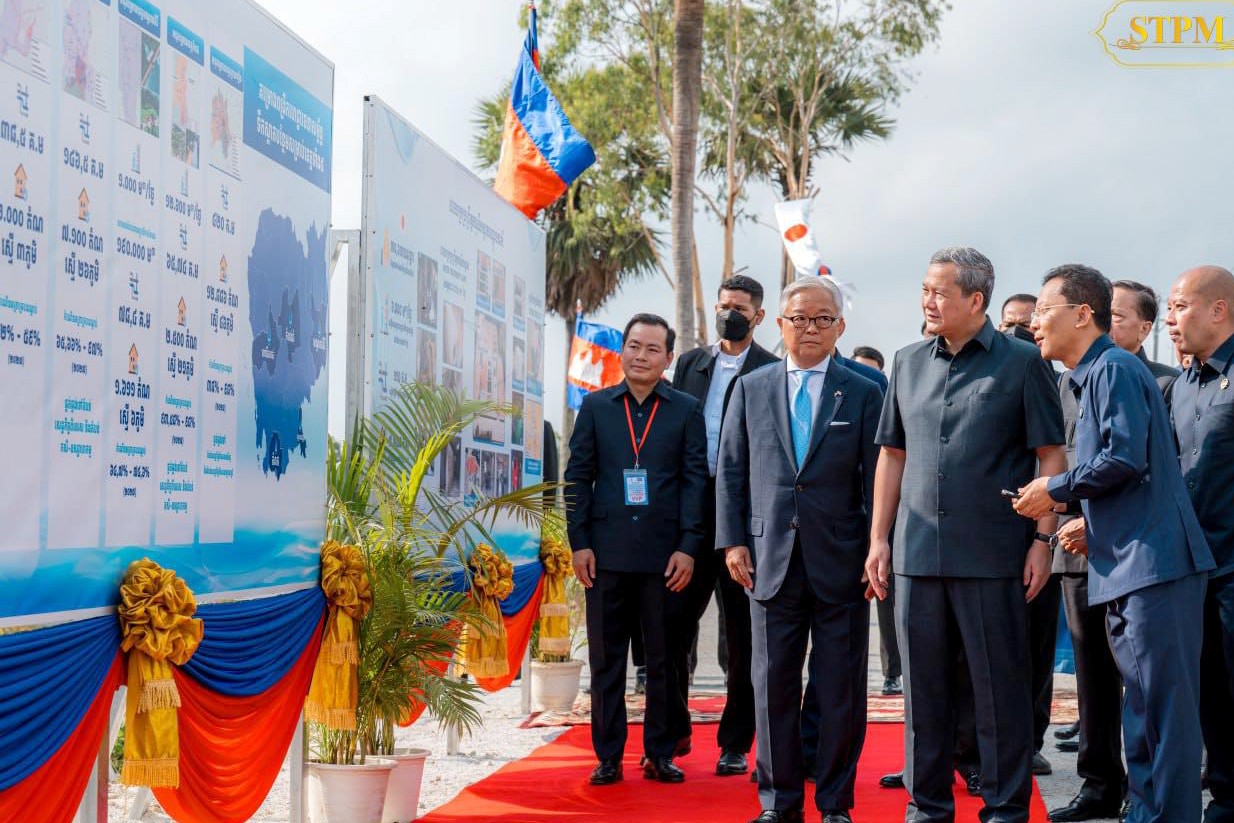
Cambodia’s clean water supply has increased by 80 per cent nationwide, rising from approximately 309 million cubic metres in 2018 to about 556 million cubic metres in 2025, according to Minister of Industry, Science, Technology and Innovation Hem Vanndy.
He said the number of households connected to piped water systems under the ministry’s jurisdiction has more than doubled, from 781,908 in 2018 to 1,571,976 in 2025.
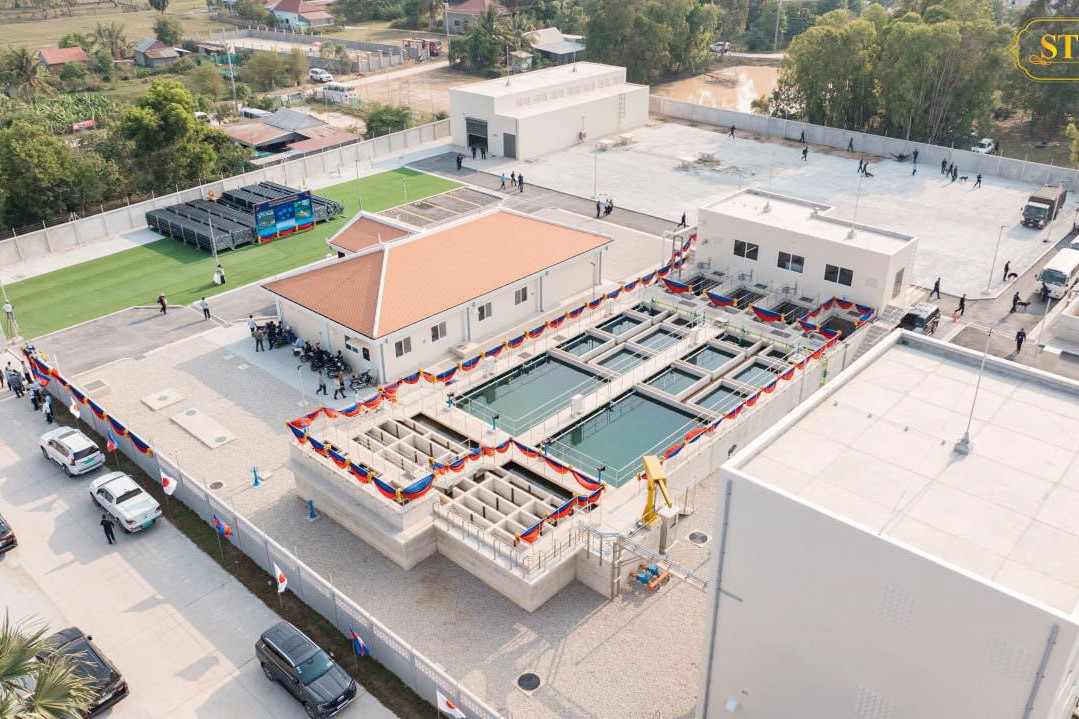
The figures were presented during the March 26 official inauguration of the Andong Tasey Water Treatment Plant in Svay Rieng town, which also served as the groundbreaking ceremony for additional water infrastructure expansion projects in five provinces, held under the presidency of Prime Minister Hun Manet, with support from Japan.
Vanndy noted that the clean water sector has received continuous support in the form of technical assistance, grants and concessional financing to develop infrastructure capable of delivering sustainable and high-quality services to citizens, as well as industrial and business zones across the country.
Alongside infrastructure development, the ministry has prioritised strengthening technical capacity among relevant officials and is in the process of establishing a training centre for the water industry.
Despite this progress, he acknowledged that nationwide access to piped clean water still falls short of demand, given population growth, rapid urbanisation and expanding industrial activity.
Currently, total water connections cover around 42 per cent of households across the Kingdom.
To address this gap, the ministry has continued to roll out infrastructure development projects aimed at meeting rising demand, supporting economic activity and responding to climate change.
Vanndy said investment has been prioritised in underserved areas within state water utility service zones to expand supply capacity, particularly in high-demand and high-potential areas such as industrial zones, agro-industrial areas and regions with limited water resources.
These include Svay Rieng, Battambang, Kampong Cham, Kampong Speu, Banteay Meanchey, Kampot and Preah Sihanouk provinces.
He added that investment is also being directed toward emerging agro-industrial and industrial areas to ensure that once infrastructure is operational, water utilities can generate additional revenue to sustain further investment and support lower-potential areas.
Prime Minister Hun Manet said the newly inaugurated Svay Rieng water treatment plant will bring significant benefits to local communities, particularly in improving public health and environmental protection by reducing the risk of waterborne diseases and promoting overall wellbeing.
Regarding the expansion projects in five provinces — Svay Rieng, Kampong Thom, Mondulkiri, Pursat and Kampot — he noted that they will help strengthen the foundation for national development, enhance public welfare, boost local economies and support the growing needs of Cambodia’s industrial and handicraft sectors.
The prime minister added that the government has a clear socio-economic development strategy focused on promoting a green economy, strengthening environmental governance and investing in infrastructure that meets both current and future needs.
He reiterated that the government would continue to invest in key infrastructure, including clean water supply, sanitation and waste management systems nationwide, in line with the principle: “Where there is clean water, there is economic transformation”, while also improving governance, maintenance and efficient use in the water sector.