

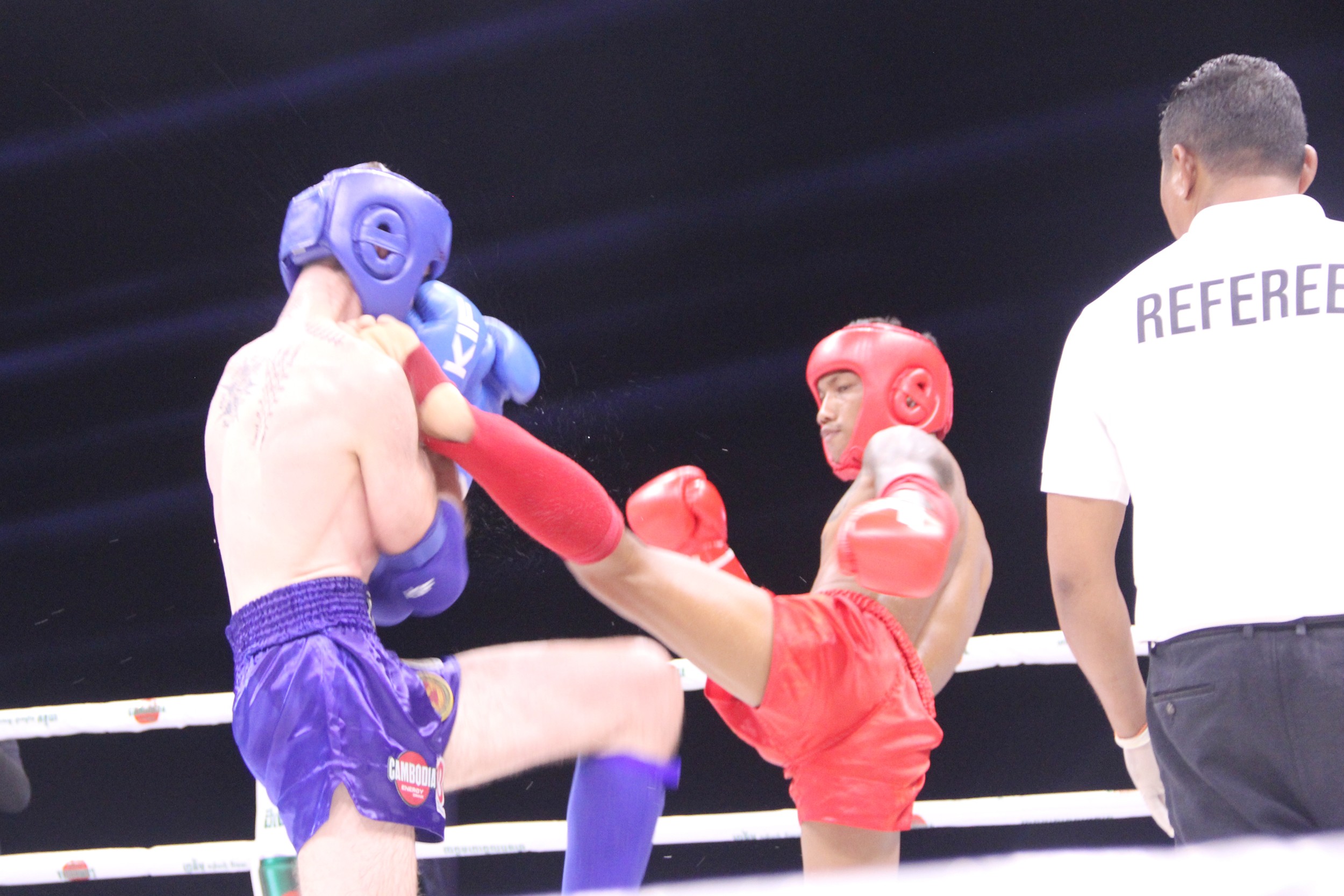
Cambodia is sharpening its strategy to secure Olympic recognition for Kun Khmer by expanding the sport’s footprint in major world powers, officials from the International Kun Khmer Federation (KIF) and the Cambodian Khmer Boxing Federation say.
The overarching goal is to see Cambodia’s national martial art recognised by the Olympic Movement and eventually included as a competition sport at the Olympic Games.
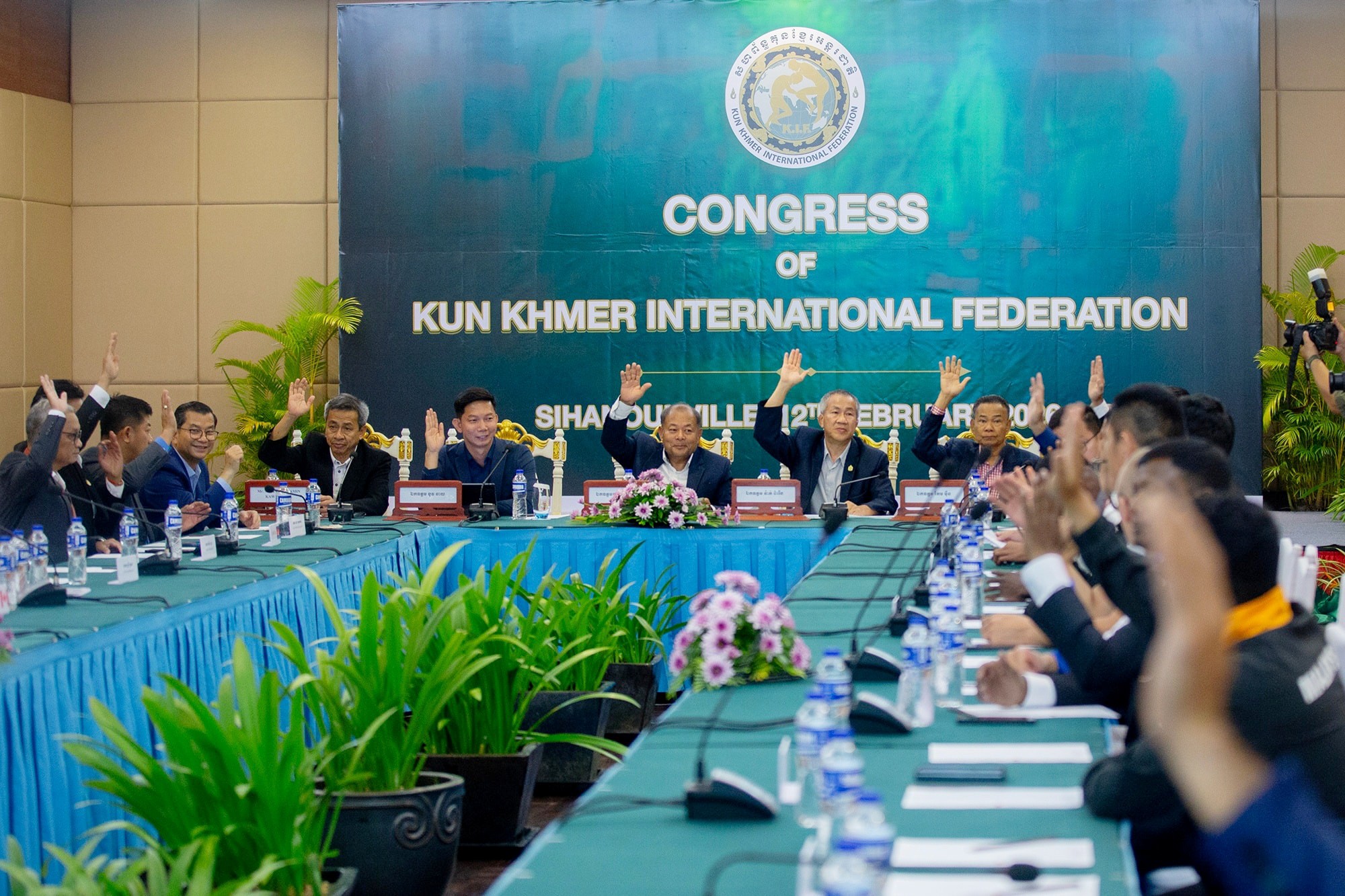
As part of this strategy, National Olympic Committee of Cambodia (NOCC) secretary-general Vath Chamroeun, who was elected KIF president for the 2026–2030 term on February 12, said major countries were being prioritised to help attract smaller nations and reach the required 75-member threshold for Olympic recognition.
“We already have several major countries as members, including the US, China, Canada, Germany, France, Australia, New Zealand, India and Russia,” Chamroeun said.
“Once major powers are actively involved in a transparent and open way, smaller countries will follow quickly,” he added.
He explained that securing 75 member countries during the new mandate was the federation’s primary objective.
“When we reach 75 members, we will prepare the necessary documentation and position ourselves for international Olympic recognition of Kun Khmer,” he said.
Chamroeun stressed that recognition by the Olympic Movement would be the first step in the much longer process of having Kun Khmer officially included in the Olympic Games, which requires meeting multiple additional criteria.
“Having Kun Khmer established in major Olympic host countries is crucial,” he said.
“When those countries host the Olympics, they have the right to propose additional sports. That accelerates the process, which is why we need both short- and long-term strategic planning,” he continued.
He highlighted that success would depend on strong governance and close cooperation between KIF and the national federation, particularly in areas of transparency, technical standards, competition management and organisational credibility.
“All countries want good communication, proper organisation and respect for competition rules and federation regulations,” he said.
“If we achieve that collectively, development will move forward smoothly,” he added.
KIF secretary-general Khov Chhay pledged to implement transparent and efficient management practices to ensure member countries remain confident and committed to developing and preserving Kun Khmer within their own borders.
He said the KIF would also expand promotional activities and organise more Kun Khmer competitions in member countries, especially major powers, to increase global visibility.
“When major countries are active members, smaller nations are encouraged to join,” Chhay said.
“That’s why we will intensify promotion and host competitions in major countries to energise the Kun Khmer movement and attract public interest,” he continued.
The KIF will also continue outreach to non-member countries and assist existing members that have yet to meet full requirements, with the aim of reaching the 75-country benchmark needed for Olympic recognition.
“Our next step is to push Kun Khmer toward becoming a sport eligible for Olympic competition,” Chhay reiterated.