

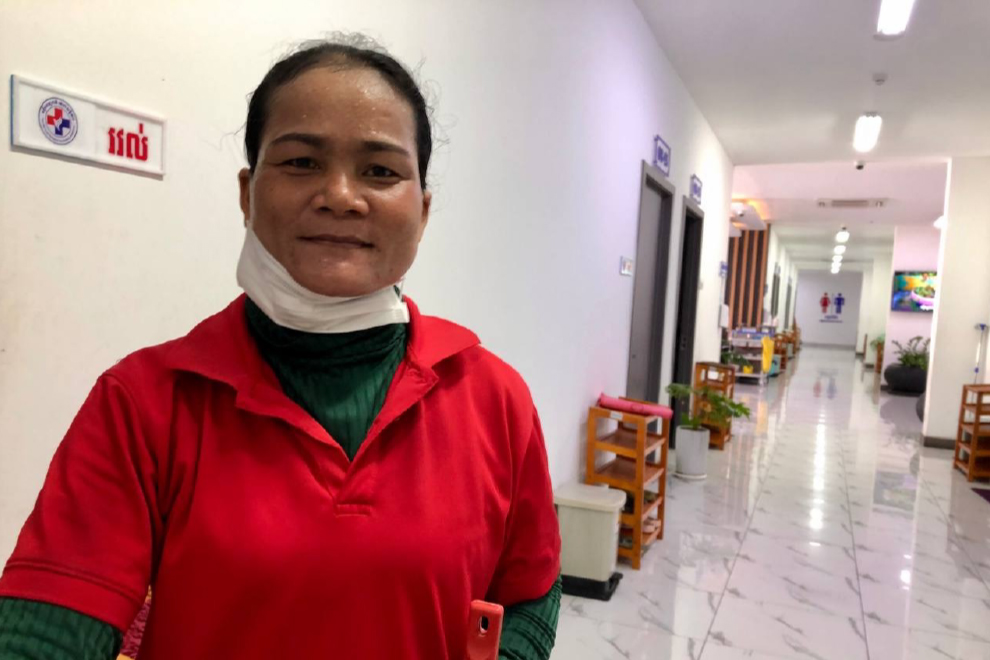
For Oeun Srey Net, the daily scent of cleaning alcohol and soapy water is the fragrance of the new life she has chosen. It is a world apart from the stinging gunpowder smoke and swirling dust she endured while fleeing the combat zones of Banteay Meanchey.
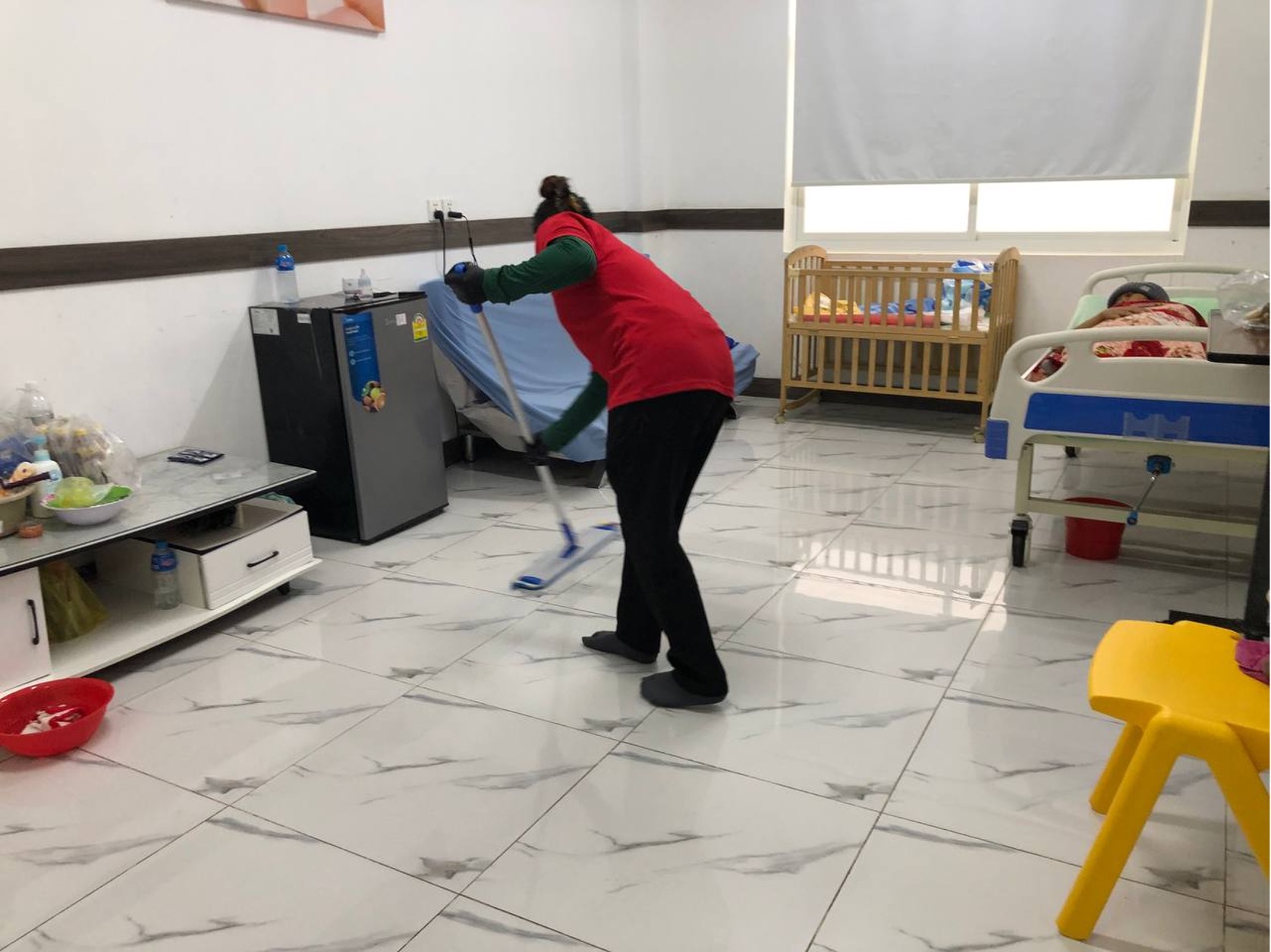
With a broom in hand, she cleans from room to room at the Techo Santepheap National Hospital — a place that has served as a sanctuary for many since the Covid-19 pandemic.
Despite this, in her heart, “Peace” (the literal meaning of Santepheap) feels painfully out of reach as long as her home and village in Thma Puok district remain high-risk zones, and while many border areas remain encircled by the razor wire and shipping containers of invading troops.
Since the outbreak of the “second round” of fighting in December 2025, Srey Net fled her home in Kbal Tonsaong village, Banteay Chhmar commune. Along with her family and many fellow villagers, she sought safety in Srei Snam district, Siem Reap province.
Despite fleeing far from the Thai artillery shelling, the trauma followed her. Even in a displacement camp tens of kilometres from the border, she was shaken by the thunder of Thai airstrikes that destroyed the O’Chik Bridge — located on the border of Srei Snam and Chong Kal districts — not far from where she was sheltering.
Following negotiations between Thailand and Cambodia through the General Border Committee (GBC), and a trilateral ministerial meeting between Cambodia, Thailand and China, a ceasefire was reached on December 27, 2025.
However, Srey Net and her family could not return home immediately. Her house sits within a “Red Zone” — an area highly vulnerable to future clashes and littered with unexploded ordnance (UXO) left over from the fighting.
Currently, more than 35,000 Cambodian citizens are still unable to return to their homes.
According to the Banteay Meanchey provincial administration, six villages in the province remain occupied by Thai forces. These include Choukchey and Prey Chan villages in Ou Beichoan commune, Ou Chrou district, and Samaki, Trapeang Samraong, Phlov Beak and Banteay Mean Rith villages in Kouk Romiet commune, Thma Puok district.
Some residents from close to Srey Net’s village have left the displacement camp and head for home. She also left the camp, but her destination was not her village; Instead, she headed for Phnom Penh, where she works as a cleaner to support her family.
“When the war broke out and I fled to the camp, we lost our property, our jobs and our income. One day, I saw a company advertising for domestic workers, so I contacted them for information,” she explained, in the distinct accent of Banteay Meanchey.
“They told me to come to Phnom Penh. I didn’t even have the money for the bus fare, but the company told me it was okay — just come, and they would settle the travel costs later. So, I started working right away,” she added.
For nearly two months now, she has been living in Phnom Penh, working as a janitor at the Techo Santepheap National Hospital. She is a mother of three; her youngest daughter is just over two years old. Every riel she saves from her cleaning job is sent home to support her children and her elderly parents.
“I am here physically,” she says, “but my heart is always with my old parents at home”.
Despite being busy with work and saving money, the 41-year-old constantly longs for the day she can return home to the happy family reunions she knew before the war.
“I — we — never wanted anything more than for the leaders to find a solution so we can return to our homes and get our land back. We don’t want anything more than that,” she said.
“Working here, I am glad to have a job, but my heart is still filled with fear because my parents at home are very old,” she added.
While she toils in the city, Srey Net’s mind often drifts to her eldest daughter, who is set to be married soon.
She is grateful that the recruitment company has granted her permission to return home to organise the wedding before the upcoming Khmer New Year, but dreams of seeing her daughter in a wedding gown in the home where they were once happy, rather than in a place of fear.