

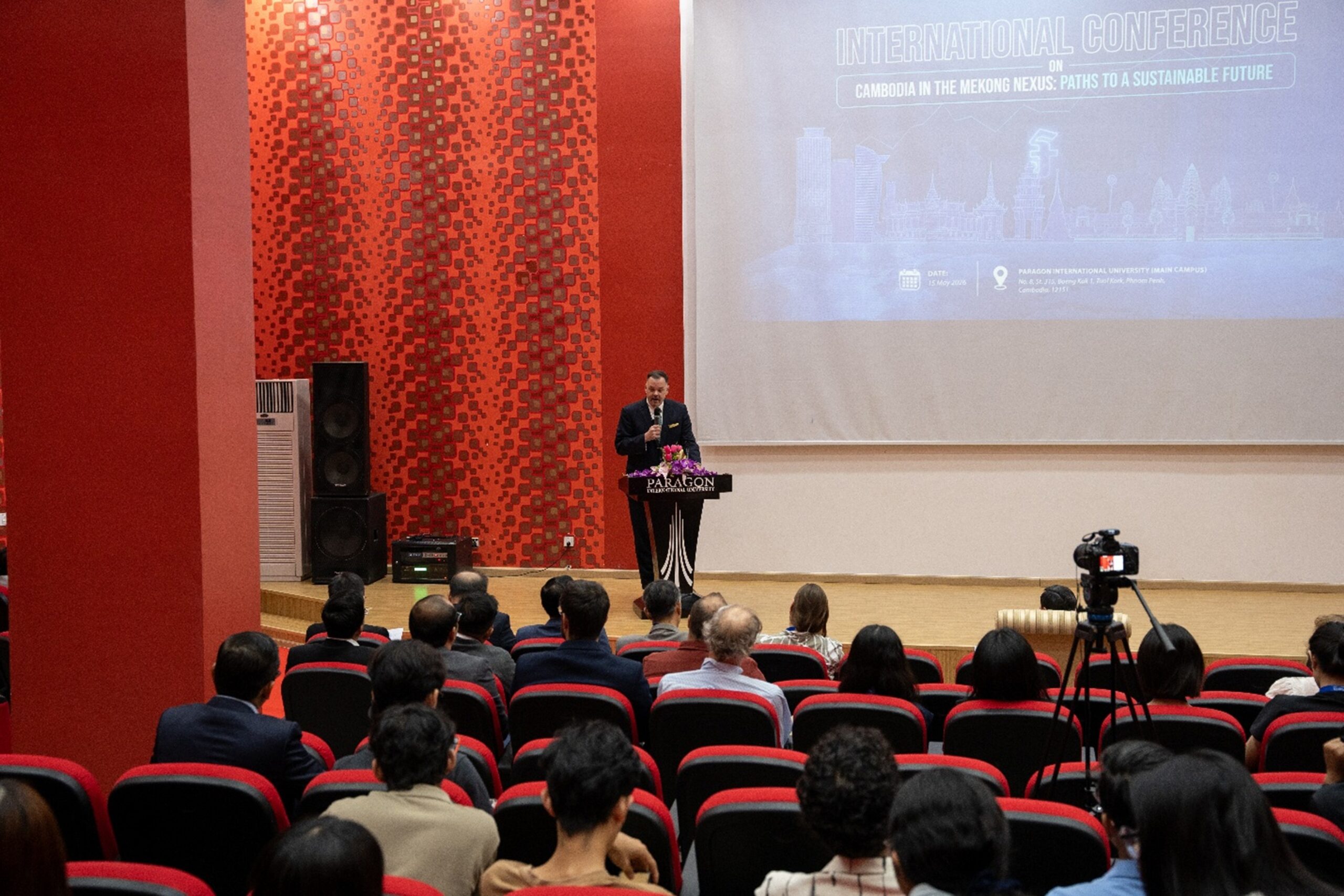
Paragon International University hosted a recent international conference, bringing together researchers from around the world to discuss the sustainable development of the Mekong region.
The full-day May 15 event, themed “Cambodia in the Mekong Nexus: Paths to a Sustainable Future”, provided a high-level forum for researchers, policymakers, government officials, students and members of the public to discuss the present and future of the Mekong region.
The participants engaged in discussions about development approaches that will ensure inclusive growth, while protecting the environment and safeguarding the future for coming generations.
Bradley Jensen Murg, university provost, addressed the opening ceremony.
He highlighted the importance of the Mekong region, noting that as a small nation, Cambodia can benefit from multi-sectoral resources through regional cooperation.
He also noted the region’s economic potential, thanks to large market demand and rapid supply, but warned that weak cooperation mechanisms and democratic governance challenges are weaknesses which will require collective action at the government level.
Conference chair Kashif Hasan Khan explained that the idea for establishing the conference emerged after he arrived in Cambodia in August last year.
Having previously organised similar programmes across Central Asia, he saw the potential for Paragon to host the event.
After several months of work, he was pleased to share that researchers from Southeast Asia, Europe, the US and Asia were present, notably from Cambodia, Myanmar, Laos and Vietnam.
Anja Mihr, programme director of Germany’s Center on Governance through Human Rights, also addressed the event.
She stressed that sustainable development requires governance that is transparent, equitable, free from corruption and political violence, as well as environmentally sustainable and supportive of private-sector growth.
Mihr also noted that discussions surrounding the Sustainable Development Goals (SDGs) should not overlook human rights issues, which are closely interconnected with development.
Ministry of Environment secretary of state Choup Paris explained that the government considers economic growth, social well-being and environmental protection as the three pillars of sustainable development.
He noted that while many countries consistently promote environmental protection, they cannot ignore economic realities and development needs, particularly financial considerations.
Paris also highlighted Cambodia’s efforts to strengthen environmental cleanliness, explaining that the Mekong River remains an essential source of life for people across many countries, all of whom must work together to protect the river for both present and future generations.
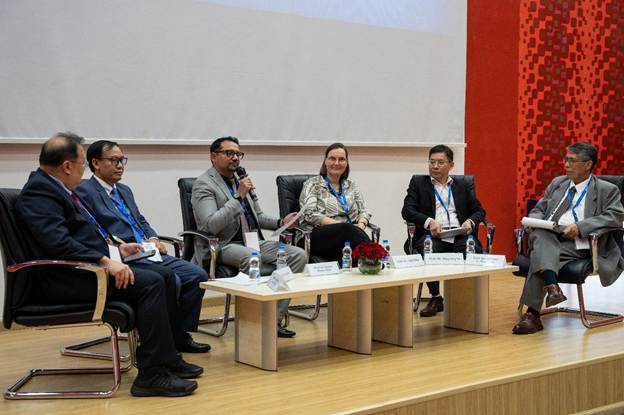
The conference also featured the “Governance, Connectivity and Climate: Rethinking Development in the Mekong Region” panel discussion.
It focused on environmental, economic and governance challenges affecting the Mekong region, as well as broader regional issues. The panellists also highlighted environmental threats facing the region, including biodiversity loss, illegal and destructive fishing, marine plastic pollution and the environmental impacts of hydropower dams.
The speakers emphasised the importance of ensuring transparency, accountability and public participation in governing sustainable development, as well as increased regional connectivity.