


The pilot implementation of Cambodia’s Recognition of Prior Learning (RPL) programme for former migrant workers has been hailed as a success by the labour ministry. The programme aims to transform years of work experience into officially recognised certificates.
The initiative has helped workers — particularly former migrant workers returning from Thailand — gain greater confidence in their own abilities while improving their chances of securing employment and earning higher incomes.
Minister of Labour and Vocational Training Heng Sour visited the Battambang Institute of Technology (BIT), where the programme is being trialled, on May 18.
He was accompanied by UN resident coordinator in Cambodia Vladanka Andreeva and Xiaoyan Qian, director of the International Labor Organisation (ILO) for Cambodia, Thailand and Laos.
The programme is seen as an important bridge between basic education and decent employment opportunities for Cambodian youth, particularly former migrant workers, out-of-school youth and other vulnerable groups.
Nearly 100 former migrant workers from Thailand — including seven women — have received RPL certificates from BIT since the programme was officially launched.
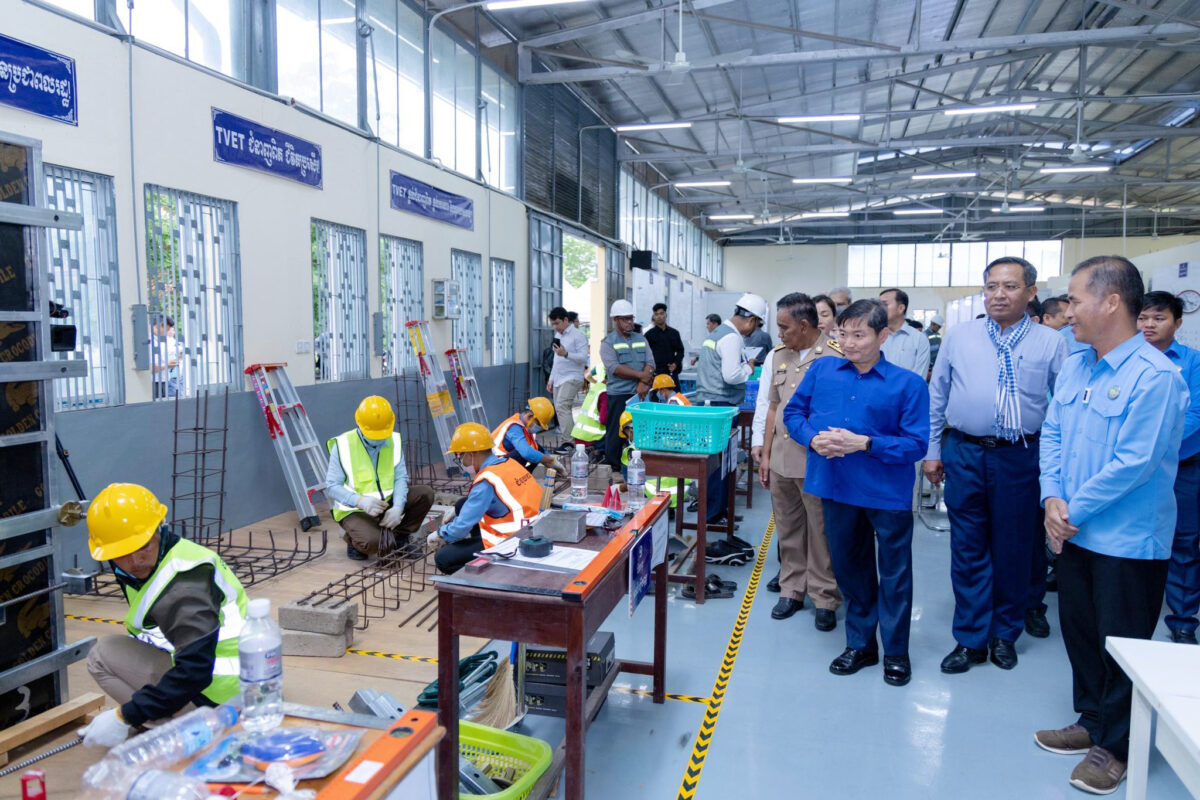
Five participants shared their personal experiences during the event, expressing happiness at finally receiving formal recognition for skills and abilities they had acquired through years of practical work.
All five participants said the RPL certificates were highly valuable both now and for the future, as they boosted self-confidence and increased opportunities for higher wages. They also called for the programme to be expanded further so more former migrant workers could benefit from certification.
Sour encouraged graduates who had already obtained RPL certificates to help spread awareness among neighbours and fellow former migrant workers about the opportunity to sit the certification tests free of charge through government support.
He noted that the labour ministry of Labour is considering ways to simplify the application process, particularly to encourage greater participation from women migrant workers.
The labour minister observed that many former migrant workers appeared to gain significantly more confidence after receiving the certificates, as employers were more likely to recognise their skills, trust their capabilities and potentially offer higher salaries.
He noted that those pursuing self-employment — such as bakers — could also gain greater customer trust and improve their earnings through official certification.
“Besides this, the young people also have opportunities to develop additional skills, such as communication with customers,” Sour said.
“The success of these participants is a meaningful reminder that skills developed through hard work and real-life experience are valuable assets that deserve full formal recognition,” he added.
The ILO’s Qian explained that the participants could become role models and goodwill ambassadors for the RPL programme in their workplaces and industries, especially for women workers.
“I hope their employers will value this testing and that more former migrant workers and workers in general will also participate,” she said.
“I firmly believe that under the leadership of Sour, this programme will continue to grow in the future, helping build confidence not only among former migrant workers but also among the next generation of youth,” she added.